
Florida Lawn Basics
St. Augustinegrass Care in Northwest Florida
Healthy St. Augustinegrass starts with the right cultivar, a higher mowing cut, irrigation based on drought signs, and careful diagnosis of brown areas.
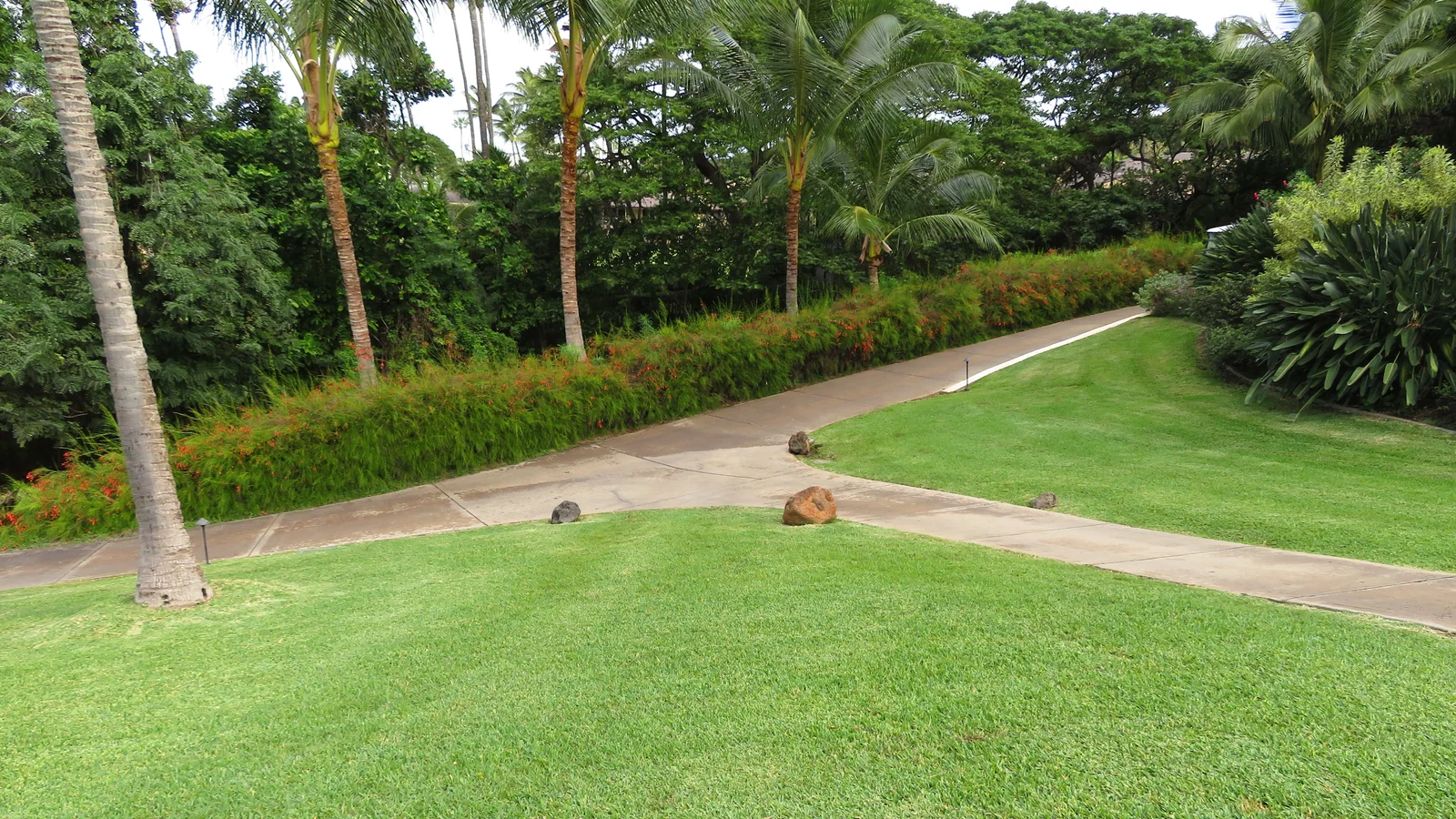
Keep standard St. Augustinegrass at 3.5 to 4 inches and most dwarf cultivars at 2 to 2.5 inches. During active growth it commonly needs weekly mowing, but cut only when the one-third rule allows it and sharpen the blade about monthly. Water established turf only after folded blades, a blue-gray cast, or lingering footprints appear, applying one-half to three-quarters of an inch. Diagnose yellow or brown patches before choosing a treatment because drought, chinch bugs, disease, mowing injury, and wet roots can overlap.
Broad blades and thick surface runners make St. Augustinegrass easy to spot, but the species name is only the start of a care plan. Floratam, CitraBlue, and dwarf cultivars do not all share one mowing height. Sunlight, traffic, irrigation coverage, coastal exposure, and the root zone also change how the lawn responds.
Its dense canopy, useful salt tolerance, and cultivar-dependent shade performance explain its popularity. Its poor wear tolerance and several look-alike pest, disease, and moisture problems explain why routine diagnosis matters. Protect the correct leaf height, water from symptoms rather than a timer, and treat a color change as evidence to investigate.
Identify the cultivar and match it to the site
Standard St. Augustinegrass cultivars grow best with a taller canopy, while dwarf and semi-dwarf cultivars tolerate a lower maintained height. If the cultivar is unknown, inspect installation records or seek a local identification before lowering the mower. The wrong height can create chronic stress even when watering and other care appear correct.
St. Augustinegrass generally handles filtered shade better than bermudagrass, but it still needs useful light. Reduce expectations in deep shade, where turf may remain thin despite extra water or fertility. It also has relatively low wear tolerance, so repeated foot, pet, or vehicle traffic should be redirected rather than repaired over and over with new sod.
Mow high enough and cut cleanly
UF/IFAS recommends 3.5 to 4 inches for standard cultivars and 2 to 2.5 inches for most dwarf types. A lawn finished at 4 inches should be cut by about 6 inches; one finished at 2.5 inches should be cut by about 3.75 inches. St. Augustinegrass commonly needs weekly mowing in the growing season and may need none during a north Florida winter, but measured growth still controls.
Use a sharp rotary blade on reasonably dry turf. UF/IFAS advises sharpening about monthly during the growing season. Shredded tips can give an otherwise healthy lawn a tan cast, while a low cut exposes stems and reduces rooting. Alternate directions, avoid tight turns that tear runners, and leave ordinary clippings unless they form heavy piles.
Water from drought signals, not habit
Established St. Augustinegrass should be irrigated when blades begin to fold, the canopy develops a blue-gray cast, or footprints remain visible. Apply about one-half to three-quarters of an inch per event, enough to reach roughly the top 8 inches of the root zone in UF/IFAS guidance, and then wait until drought signs return. Adequate rainfall should replace a scheduled cycle.
Early morning is the preferred irrigation time. Frequent shallow watering encourages shallow roots, while excess irrigation can increase thatch, nutrient loss, weeds such as dollarweed and sedges, and disease pressure. Use straight-sided catch cans to check how evenly a zone applies water, and verify current restrictions with the applicable municipality, utility, and Northwest Florida Water Management District.
Keep fertility tied to active growth
Wait until the lawn is actively growing and fully green after winter before considering nitrogen. A partly green spring lawn may have roots that are not ready to use added nutrients, especially in sandy soil where leaching is a concern. Late high-nitrogen growth can also reduce cold tolerance as Panhandle temperatures begin to fall.
Yellow color does not prove a nutrient deficiency. Cold soil, excess water, high pH, root damage, disease, nematodes, and mowing injury can produce similar symptoms. Base any fertility decision on the current product label, actual turf area, site response, and rules that apply to the address rather than copying a generic holiday schedule or rate.
Scout brown patches before responding
Southern chinch bugs are an important St. Augustinegrass pest, but brown or yellow grass alone does not confirm their presence. Look at the pattern, moisture, roots, mower history, and the transition between healthy and damaged turf, then verify the suspected pest. Treating an unconfirmed cause can delay correction of drought, root disease, or another stress.
Warm rainy weather can favor gray leaf spot, while prolonged wet soil is associated with root problems. Large patch is most often observed from November through May below 80°F, especially after about 48 hours of continuous leaf wetness. Those weather thresholds guide scouting, not automatic spraying. Confirm the disease before considering a fungicide, and use any pesticide only for a turf and target listed on its current label.
Common questions
Frequently asked questions
How tall should St. Augustinegrass be in Northwest Florida?
Maintain standard cultivars at about 3.5 to 4 inches and dwarf or semi-dwarf cultivars around 2.5 inches. Confirm the cultivar, measure the actual finished cut, and follow the one-third rule rather than trusting a numbered mower lever.
Why is my St. Augustinegrass turning brown?
Possible causes include drought, excess moisture, mowing injury, dormancy, chinch bugs, root disease, leaf disease, nematodes, or other stress. Check the season, soil moisture, pattern, roots, and recent maintenance, then confirm the diagnosis before selecting a treatment.
Will more water repair thin St. Augustinegrass in shade?
Usually not if insufficient light is the limiting factor. Shade also reduces the turf's water and fertility needs, so extra irrigation can create new problems. Improve light where appropriate or replace persistently thin deep-shade turf with a suitable bed or groundcover.
Sources and local guidance
This educational guide was prepared using the primary resources below. Product labels and current local rules always take priority.
- St. Augustinegrass for Florida Lawns (UF/IFAS Extension)
- Mowing Your Florida Lawn (UF/IFAS Extension)
- Watering Your Florida Lawn (UF/IFAS Extension)
- Southern Chinch Bug (UF/IFAS Extension)
- Large Patch (UF/IFAS Extension)
Keep reading
Related lawn care guides
Can Grass Grow Under Live Oaks and Pine Trees?
Shade, roots, moisture, leaf litter, and mower access all affect turf beneath Panhandle trees, and sometimes grass is not the best groundcover.
Read the guide
Florida Grass Mowing Height Guide for Panhandle Lawns
Use grass species and cultivar, not a mower deck number or a neighbor's lawn, to choose a healthy mowing height for Florida Panhandle turf.
Read the guide
How Often Should You Mow a Florida Panhandle Lawn?
A practical guide to choosing the right mowing interval for a Florida Panhandle lawn as grass growth, rainfall, temperature, and turf type change.
Read the guideLocal lawn care
Need help with your Okaloosa or Walton County lawn?
Ask about lawn mowing, yard cleanup, tree and shrub trimming, bed maintenance, weed control, mulching, or debris removal. Service and address availability must be confirmed.