
Water & Soil
Rainy-Season Lawn Care Tips for Florida Panhandle Yards
Frequent rain changes mowing, irrigation, disease pressure, and cleanup. Learn how to respond without assuming every wet lawn needs the same fix.
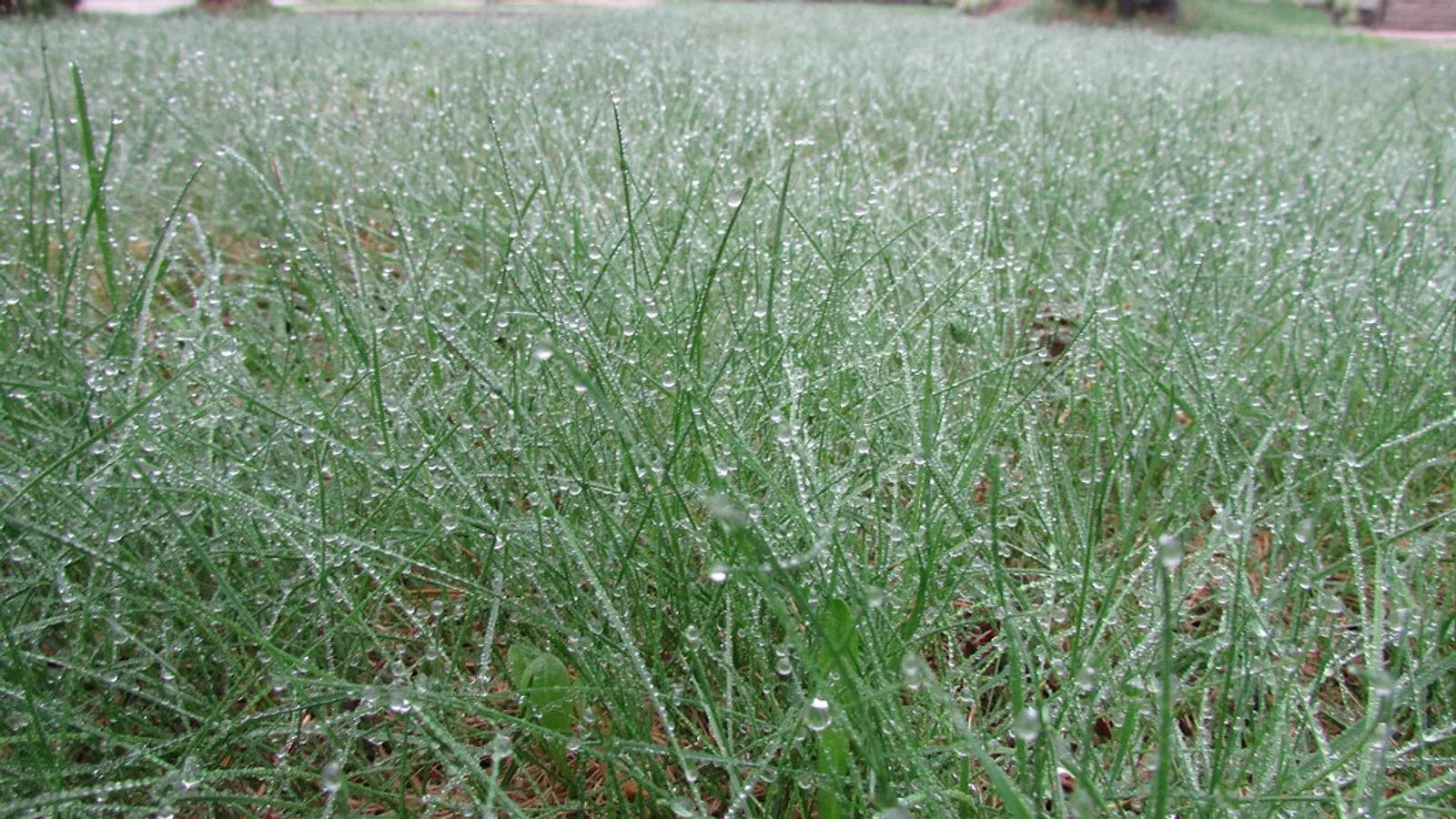
After useful rain, suspend the irrigation timer and do not restart it until folded blades, a blue-gray cast, or lingering footprints show that established turf is drying. When watering is actually needed and allowed, apply about one-half to three-quarters of an inch. Delay mowing if tires sink or footsteps squeeze water from the soil, then keep the normal species height and remove no more than one-third. Map standing water and diagnose discolored patches instead of treating every wet-weather symptom as disease.
A wet Panhandle week can expose problems that stayed hidden in dry weather. One corner holds water, the mower sinks along a compacted route, grass jumps past its normal cutting window, and an automatic controller adds another cycle to soil that is already saturated. A forecast total does not settle the question because summer showers can miss one street and soak the next.
Walk the property after the weather clears. Check whether the surface carries your weight, where puddles remain, whether the controller skipped its cycle, and how much leaf growth occurred. Those observations tell you whether to mow, wait, repair irrigation, or investigate drainage. They are more useful than treating the words rainy season as a maintenance schedule.
Let Rainfall Replace Irrigation
Turn off or suspend routine irrigation after adequate rain. Established turf does not benefit from water added simply because the controller is scheduled to run. Repeated saturation reduces oxygen around roots, encourages shallow rooting, increases nutrient movement, and can favor dollarweed, sedges, thatch, and several root problems. A functioning rain or moisture shutoff helps, but it does not replace observation.
Check several parts of the lawn because rainfall and sprinkler output are rarely uniform. If blades fold, turn blue-gray, or retain footprints after surrounding areas recover, investigate that section and its sprinkler coverage instead of increasing every zone. When irrigation is genuinely needed and allowed, water early in the morning. Use straight-sided catch cans to time each zone to one-half to three-quarters of an inch, then wait for drought signals before watering again.
- Inspect the controller after storms and power interruptions.
- Empty catch cans and rain gauges between measurements.
- Repair tilted or blocked heads instead of extending all run times.
- Check current utility and local restrictions before resetting a schedule.
Time Mowing Around Wet Turf
Rain and warmth can accelerate leaf growth, making the normal weekly pattern a poor guide. Use the one-third rule to decide when a cut is needed, but wait if tires sink, footprints press water from the soil, or the mower would leave ruts. Compaction and torn turf can create a longer problem than a temporarily shaggy appearance. Never mow during lightning or unsafe storm conditions.
When the ground is firm enough, choose the driest practical window and use a sharp blade. Wet leaves tend to fold and clump, which produces an uneven cut and piles that shade grass. If clippings collect, redistribute or remove the clumps rather than lowering the deck for a second aggressive pass. Clean stuck material from the mower only after the equipment is safely shut down.
A rain delay may change the next cut, not the correct height. If turf grows too tall, return it to the species height over more than one mowing instead of scalping it at once.
Read Standing Water as a Site Clue
Native Panhandle sand often drains quickly, but a developed lot may contain compacted fill, construction debris, a shallow hard layer, or a low grade. Water that remains long after nearby areas drain is evidence to investigate. Note its shape and duration, whether downspouts discharge there, and whether traffic or equipment repeatedly crosses the area. The right correction depends on the cause.
Core aeration may help genuinely compacted turf, but it does not fix a failed grade, blocked outlet, or broken irrigation line. Likewise, adding more sand to a low area without understanding drainage can move water rather than solve it. Keep heavy mowers and vehicles off saturated soil, clear safe surface obstructions, and seek site-specific drainage help when water approaches structures or repeatedly drowns turf.
Scout for Disease Without Diagnosing by Color
Warm, rainy conditions can favor gray leaf spot in St. Augustinegrass, while waterlogged roots are associated with Pythium root rot and take-all root rot. Large patch is a different weather clue: UF/IFAS reports it most often from November through May below 80°F, with infection favored when leaves remain continuously wet for about 48 hours. Those conditions narrow the investigation, but they do not prove which problem is present.
Record the shape, speed, location, and weather surrounding a patch. Look at individual leaves and roots, not just the color from the driveway. Correct obvious irrigation excess and avoid moving wet clippings from a suspicious area across the entire lawn. Because fungicides are disease- and timing-specific, an uncertain case is a reason to seek diagnosis, not to cycle through products.
- Expanding patches: photograph and mark the edge.
- Wet roots: review irrigation and drainage first.
- Leaf spots: inspect actual blades rather than relying on aerial color.
- Localized wilt: confirm sprinkler coverage and root condition.
Keep Rainy-Season Cleanup Out of Waterways
Sweep clippings and loose soil from driveways and sidewalks back into the lawn where they can be used, provided they are not diseased clumps. Do not hose yard material into a gutter or storm drain. Runoff can carry grass, sediment, fertilizer, and other pollutants toward ponds, bays, and the Gulf. Florida-Friendly Landscaping guidance treats runoff protection as part of routine yard care.
Trim or collect only what can be safely managed before the next storm. Routine yard-waste service varies by municipality, unincorporated area, and hauler, while storm-debris collection follows separate event instructions. Confirm the provider for the actual address before setting out material, and understand who is responsible for debris produced by a hired service.
Common questions
Frequently asked questions
Should sprinklers be turned off for the entire rainy season?
Do not rely on the season name alone. Suspend irrigation after adequate rainfall and resume only when the turf shows drought need, subject to current restrictions. Some weeks are wet everywhere; others contain isolated showers and uneven soil moisture.
What should I do if rain makes my grass too tall to cut normally?
Wait until the surface can support the mower, then remove no more than one-third of the blade. If necessary, make another cut after the turf recovers rather than dropping directly to the usual height and scalping it.
Does standing water mean my sandy soil needs aeration?
Not necessarily. Compaction is one possibility, but grade, fill, blocked drainage, a leaking system, or concentrated roof runoff can also be responsible. Identify the water source and soil condition before choosing a correction.
Sources and local guidance
This educational guide was prepared using the primary resources below. Product labels and current local rules always take priority.
- Watering Your Florida Lawn (UF/IFAS Extension)
- Improving Turfgrass Health: Proper Irrigation Techniques (UF/IFAS Extension)
- Mowing Your Florida Lawn (UF/IFAS Extension)
- Florida-Friendly Landscaping Nine Principles (UF/IFAS Florida-Friendly Landscaping Program)
- Large Patch (UF/IFAS Extension)
Keep reading
Related lawn care guides
Florida Panhandle Lawn Care Calendar: A Season-by-Season Guide
Use turf growth, weather, and lawn conditions, rather than a one-size-fits-all date, to plan a healthier Florida Panhandle yard through every season.
Read the guide
Coastal vs. Inland Lawn Care in Okaloosa and Walton Counties
County lines do not determine lawn care. Compare each yard's salt exposure, soil, sun, traffic, drainage, and maintenance needs before choosing turf.
Read the guide
St. Augustinegrass Care in Northwest Florida
Healthy St. Augustinegrass starts with the right cultivar, a higher mowing cut, irrigation based on drought signs, and careful diagnosis of brown areas.
Read the guideLocal lawn care
Need help with your Okaloosa or Walton County lawn?
Ask about lawn mowing, yard cleanup, tree and shrub trimming, bed maintenance, weed control, mulching, or debris removal. Service and address availability must be confirmed.