
Florida Lawn Basics
Centipedegrass vs. Bahiagrass for Panhandle Lawns
Centipedegrass and bahiagrass both suit lower-input Panhandle landscapes, but they differ in texture, mowing height, shade, drought response, salt tolerance, and use.
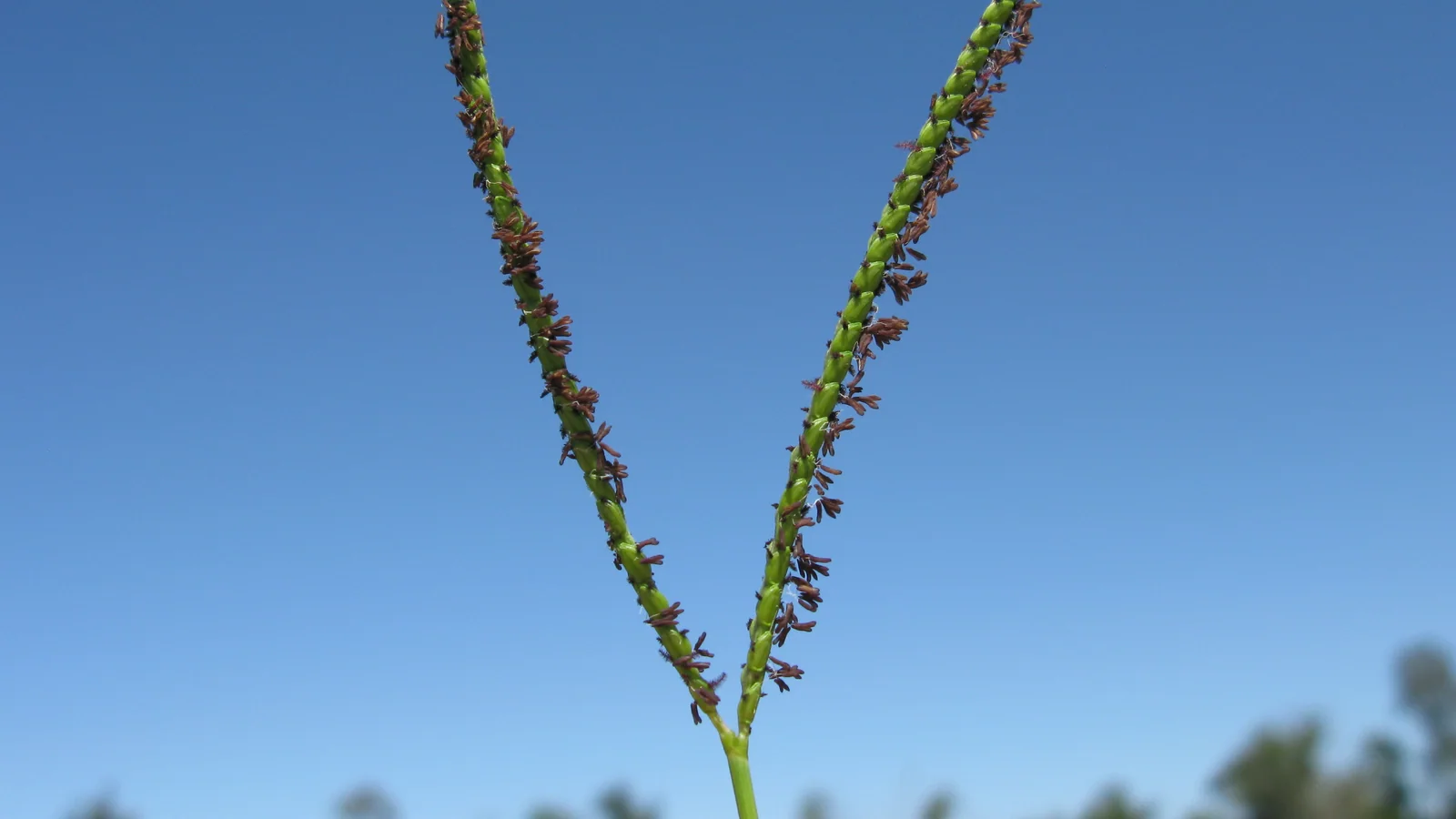
Choose centipedegrass for an acidic, lower-input site where a lower, more continuous lawn and light traffic matter. Maintain it at about 1.5 to 2.5 inches. Choose bahiagrass for sunny sandy ground where drought survival matters more than a dense texture, and maintain it at 3 to 4 inches. UF/IFAS places both on roughly 7-to-14-day mowing intervals during active growth. Neither handles salt or heavy wear well, and bahiagrass is the weaker shade choice.
Centipedegrass and bahiagrass both have a reputation for getting by on acidic Panhandle sand without a high-input routine. That is where the similarity ends. One forms a lower, more continuous home lawn. The other is coarser, sends up obvious seedheads, and survives extended drought by going brown and dormant.
Decide what the area has to do before choosing either one. A lightly used front lawn, sunny roadside, filtered-shade side yard, and family play route create different demands. If salt, repeated traffic, or deep shade is nonnegotiable, the correct comparison may rule out both grasses.
Compare their growth and appearance
Centipedegrass forms a slow-growing, medium-textured turf with above-ground runners. UF/IFAS describes it as the most common home-lawn grass in the Florida Panhandle. The phrase low maintenance refers to modest fertility and slower growth. It does not mean the grass tolerates salt, traffic, overwatering, or a mower set too low.
Bahiagrass has a coarser, more open appearance and produces tall seedheads during active growth. That look can be acceptable for large sunny properties where resilience matters more than a carpet-like finish. Its clumping growth and seedheads are less suited to someone expecting the dense, uniform appearance associated with St. Augustinegrass or closely managed zoysiagrass.
Match soil and fertility expectations
Both grasses are useful candidates for acidic soils, but centipedegrass is especially sensitive to excessive inputs. Too much nitrogen can increase disease and insect susceptibility, reduce cold tolerance, and contribute to centipedegrass decline. Trying to force it into a dark, fast-growing lawn undermines one of the species' main advantages.
Bahiagrass also performs on relatively infertile sandy ground and usually has modest maintenance expectations. Even so, yellow color in either grass is not automatic proof that fertilizer or lime is needed. Soil testing is most useful for pH, salinity, and lime requirement, and UF/IFAS cautions that lime requirement cannot be determined from pH or leaf color alone.
Plan for different mowing habits
The current UF/IFAS centipedegrass guide recommends 1.5 to 2.5 inches, while bahiagrass belongs much higher at 3 to 4 inches. During active growth, both generally fall in a 7-to-14-day mowing range. Measure the finished leaf because numbered mower positions are not inches, and cut early enough to remove no more than one-third.
Bahiagrass seedheads can shoot above the canopy before the lower leaves reach their cutting trigger. Do not lower the deck to chase them. UF/IFAS gives a useful example: bahiagrass maintained at 3 inches should be mowed at roughly 4 to 4.5 inches. Centipedegrass maintained at 2 inches should be cut before it exceeds about 3 inches. A heavy-duty sharp rotary blade also matters because bahiagrass leaves and seedhead stems are tough.
Weigh drought, shade, traffic, and salt
Bahiagrass has excellent drought survival because of its extensive root system, though it may turn brown and enter dormancy during dry weather. Centipedegrass has a shallower root system and more moderate drought tolerance. For either established lawn, wait for folded or blue-gray blades or lingering footprints before irrigating. When watering is needed and allowed, apply about one-half to three-quarters of an inch rather than a daily shallow sprinkle.
Centipedegrass has fair shade tolerance, giving it an advantage over bahiagrass where light is somewhat filtered, but neither grows well in deep shade. Both have poor wear tolerance, and bahiagrass has very poor salt tolerance. For a heavily used area or a site exposed to coastal salts, the comparison may point away from both choices rather than produce a winner.
Choose from the site's nonnegotiable needs
Centipedegrass is often the stronger fit when a homeowner wants a lower, more uniform lawn and the site has acidic soil, light to moderate shade, and limited traffic. It rewards restraint: mow correctly, avoid excess water and fertility, and investigate irregular patches for insects, disease, nematodes, compaction, or other causes before reacting.
Bahiagrass can make more sense on broad sunny ground with sandy soil, limited irrigation, and acceptance of coarse leaves and seedheads. Before installation, confirm light, drainage, salinity, intended use, and establishment options. If shade, traffic, or salt is the controlling condition, compare other grasses or reduce the turf area instead of asking either species to exceed its limits.
Common questions
Frequently asked questions
Is centipedegrass better looking than bahiagrass?
Appearance is subjective, but centipedegrass generally forms a lower, more continuous lawn. Bahiagrass is coarser, more open, and produces noticeable seedheads. The better choice is the one whose appearance and site tolerances match the property.
Which grass handles drought better?
Bahiagrass has stronger drought survival and may go dormant until moisture returns. Centipedegrass has a shallower root system and moderate drought tolerance. Either can be harmed by an automatic daily schedule, so irrigate established turf only when drought signs appear.
Can centipedegrass and bahiagrass grow in shade?
Centipedegrass has fair shade tolerance, while bahiagrass is a weaker shade choice. Neither will make a durable lawn in deep shade. Where light is inadequate, a mulched or planted area is usually more practical than repeatedly adding grass and inputs.
Sources and local guidance
This educational guide was prepared using the primary resources below. Product labels and current local rules always take priority.
- Selecting a Turfgrass for Florida Lawns (UF/IFAS Extension)
- Centipedegrass for Florida Lawns (UF/IFAS Extension)
- Bahiagrass for Florida Lawns (UF/IFAS Extension)
- Mowing Your Florida Lawn (UF/IFAS Extension)
- Soil Testing and Interpretation for Florida Turfgrasses (UF/IFAS Extension)
Keep reading
Related lawn care guides
Best Grass for Florida Panhandle Yards
The best grass for an Okaloosa or Walton County yard depends on sunlight, soil, salt exposure, foot traffic, appearance goals, and maintenance capacity.
Read the guide
Florida Grass Mowing Height Guide for Panhandle Lawns
Use grass species and cultivar, not a mower deck number or a neighbor's lawn, to choose a healthy mowing height for Florida Panhandle turf.
Read the guide
St. Augustinegrass Care in Northwest Florida
Healthy St. Augustinegrass starts with the right cultivar, a higher mowing cut, irrigation based on drought signs, and careful diagnosis of brown areas.
Read the guideLocal lawn care
Need help with your Okaloosa or Walton County lawn?
Ask about lawn mowing, yard cleanup, tree and shrub trimming, bed maintenance, weed control, mulching, or debris removal. Service and address availability must be confirmed.