
Water & Soil
How to Calibrate Your Lawn Sprinklers with Catch Cans
Stop guessing at sprinkler minutes. This step-by-step catch-can test shows how much water each lawn zone applies and where coverage falls short.
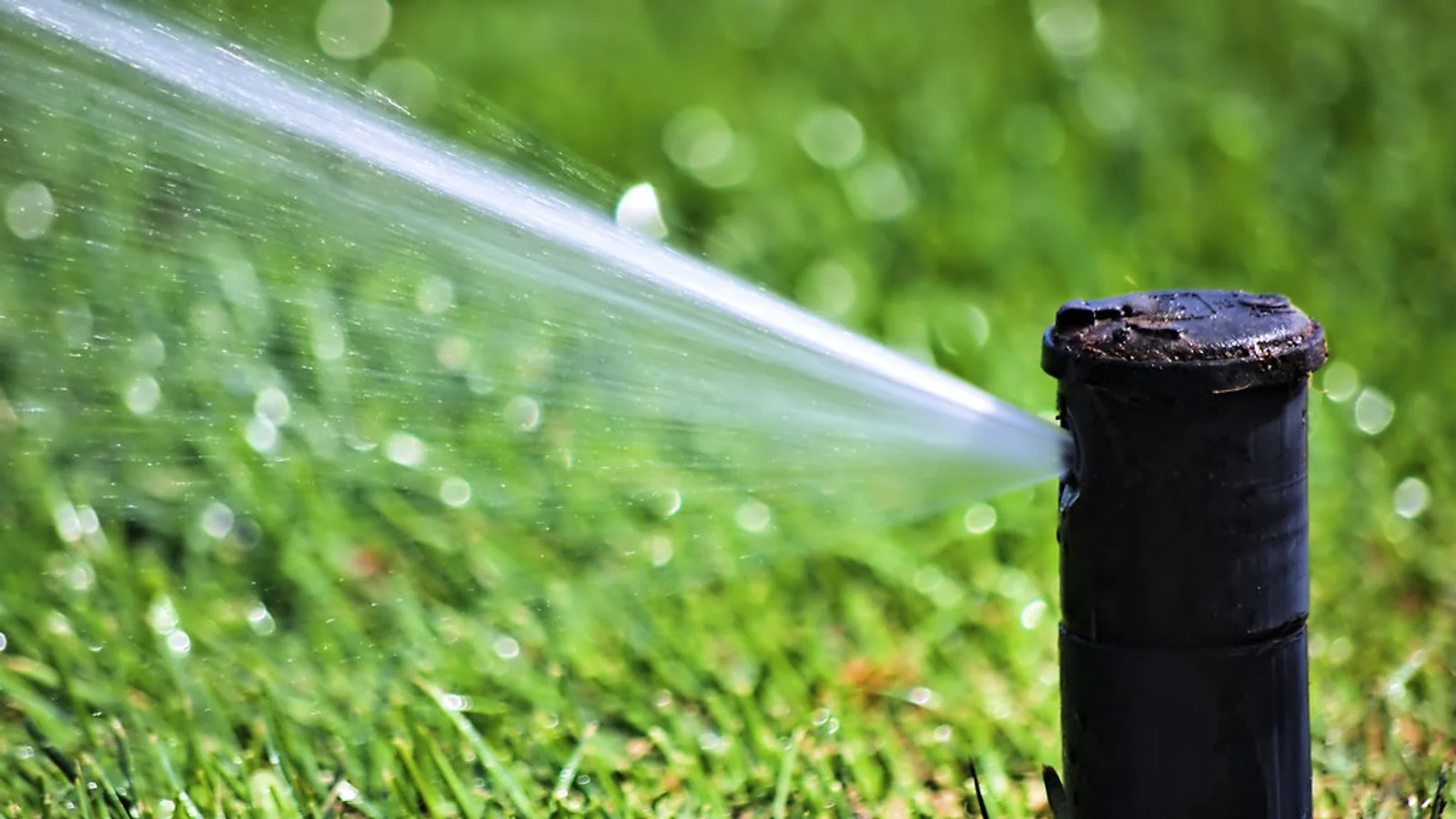
Place at least six identical, straight-sided cans across one turf zone, run it for 15 minutes, and measure every can. Add the depths and divide by the number of cans to get the average. If the average is 1/4 inch, that zone needs about 30 minutes for 1/2 inch or 45 minutes for 3/4 inch. Compare the individual cans too. A low can beside a dry patch points to poor coverage, which should be repaired instead of masked by a longer run time. Test every turf zone separately.
Twenty minutes on a controller is not a water measurement. One zone may use spray heads, another may use rotors, and the pressure can change from the first head to the last. Add wind, clogged nozzles, tilted heads, and shrubs blocking spray, and equal minutes can produce very unequal depths. That is how most of a yard gets soaked while one corner stays dry.
A catch-can test turns sprinkler performance into information you can use. The test is inexpensive, takes roughly one cycle per zone, and helps answer two separate questions: how quickly is water being applied, and how evenly is it landing? Those answers support smarter scheduling for the sandy, shaded, compacted, coastal, and inland sites found across Okaloosa and Walton Counties. They also make irrigation problems easier to distinguish from turf problems.
Gather simple, consistent measuring tools
Use at least six identical straight-sided containers for a small zone and more for a large or irregular one. Commercial catch cups work well, but clean tuna-style cans or other shallow containers with vertical sides can also provide a useful homeowner check. Avoid bowls, tapered cups, and containers with different openings because their water depths cannot be compared fairly. Add a ruler marked in small increments, a notepad, and a timer.
Choose a calm early morning when possible. Wind can move spray away from cans and make a normally acceptable zone appear uneven. Inspect for obvious broken pipes or heads before beginning, and flag any head that is buried, tilted, clogged, or spraying pavement. The test should measure ordinary operation, but a large leak should be repaired before running a full cycle. Know which cans belong to which zone so results do not get mixed.
- Six or more identical, straight-sided catch containers
- A ruler that can read small fractions of an inch
- A timer and a place to record every measurement
- Small flags or markers for visible sprinkler defects
- A rain-free, low-wind testing window
Place the cans and run one zone
Distribute containers throughout the irrigated turf rather than lining them up near one sprinkler. Include locations near heads, between heads, at the far edge, and in areas that usually look dry or wet. Keep the cans away from roof drip lines and surfaces that could splash additional water into them. Run only that zone for 15 minutes, using a stopwatch rather than relying on the controller display.
When the cycle ends, measure the depth in each can and record it before moving anything. If a container tipped, exclude it and repeat that location. Add all valid depths and divide by the number of cans to find the average delivered in 15 minutes. For example, if eight containers together hold 2 inches, the average depth is 0.25 inch. The exact number matters less than measuring it consistently.
Keep each zone's results separate. Spray heads and rotor heads can have very different application rates even when both are programmed for the same number of minutes.
Calculate a useful run time
Once the 15-minute average is known, calculate the time needed for the chosen application depth. Divide the target depth by the measured 15-minute depth, then multiply by 15. If the average is 0.25 inch and the target is 0.5 inch, the calculation is 0.5 divided by 0.25, multiplied by 15, or 30 minutes. UF/IFAS commonly describes 1/2 to 3/4 inch as an established-lawn application range, but soil response and runoff still need observation.
The calculated time is not a command to water on a fixed frequency. It tells you approximately how long that particular zone takes to deliver a measured amount when the lawn shows drought need. If runoff begins before the full time finishes, applying all the minutes continuously is counterproductive. Cycle-and-soak scheduling may help on a slope or compacted area, but first rule out broken heads, excessive pressure, poor grading, and soil that cannot accept water normally.
- Average depth equals total water depth divided by the number of valid cans.
- Required minutes equal target depth divided by the 15-minute average, then multiplied by 15.
- Use the result only when established turf shows a need for water.
- Stop and investigate if water begins running off the site.
Use variation to find coverage problems
An average can hide a serious distribution problem. Compare the individual measurements: if some cans are nearly empty while others contain much more than average, increasing the entire zone's time will soak the wet areas before the dry areas catch up. Look for a clogged nozzle, a head blocked by grass, incorrect spray arc, poor pressure, mixed head types, or spacing that no longer matches the landscape. Correcting distribution usually saves more water than extending the timer.
Now lay the catch pattern over the lawn pattern. A dry crescent beside a nearly empty can supports a coverage problem. A brown patch that collected about the same depth as healthy turf needs a different investigation, such as mowing injury, weak roots, insects, disease, or product damage. Catch cans do not diagnose turf, but they can rule a water-delivery problem in or out before money is spent elsewhere.
Program, maintain, and recheck the system
Repeat the full process for every turf zone and keep shrub or ornamental zones separate. Program the measured run time, then allow drought signals and rainfall to determine when a cycle is needed. Adjust schedules as seasons change, verify that a rain or soil-moisture shutoff functions, and watch for overspray onto sidewalks and streets. Florida law includes requirements for moisture-interrupting technology in specified new automatic-system installations and for testing when licensed contractors work on such systems.
Retest after repairing heads, changing nozzles, altering pressure, installing new landscaping, or noticing a new wet or dry area. A periodic 15-minute test also catches gradual changes such as sinking heads and plant obstruction. Before programming days or times, check current requirements for the address with the local government, utility, homeowners association, and Northwest Florida Water Management District. A well-calibrated system still has to operate within applicable rules.
Calibration measures depth and uniformity; current local rules determine when irrigation may run. Verify both before relying on a controller program.
Common questions
Frequently asked questions
How many catch cans do I need for a sprinkler test?
Use enough identical containers to represent the whole zone, not just the area beside one head. Six may be adequate for a small simple zone, while a larger or irregular area benefits from more. Place them near heads, between heads, at edges, and in suspected wet or dry areas. More well-distributed measurements make the average and uniformity comparison more useful.
Can I set every sprinkler zone to the same run time?
Only if measurement shows that the zones apply water at the same rate and the sites have comparable needs. Spray heads, rotors, pressure, slopes, soil, sun, and shade often differ. Test each zone independently. Equal timer minutes can produce unequal water depths, and a shaded zone may need water less often even when its application rate matches a sunny zone.
What if water runs off before the calculated time ends?
Do not keep watering simply to complete the formula. Check for excessive application rate, slopes, compaction, poor grading, leaks, and misdirected heads. A cycle-and-soak approach may allow infiltration in some situations, but persistent runoff or standing water deserves site-specific correction. Keep water and yard material out of streets and storm drains.
Sources and local guidance
This educational guide was prepared using the primary resources below. Product labels and current local rules always take priority.
- Watering Your Florida Lawn (University of Florida IFAS Extension)
- Improving Turfgrass Health: Proper Irrigation Techniques (University of Florida IFAS Extension)
- Florida Statutes Section 373.62: Water Conservation; Automatic Sprinkler Systems (Florida Legislature)
- Florida-Friendly Landscaping Guidelines for Community Associations (University of Florida IFAS Extension)
Keep reading
Related lawn care guides
How Often Should You Water a Lawn in Northwest Florida?
A practical guide to reading drought signals, watering the root zone, accounting for Panhandle rain, and checking the rules for your address.
Read the guide
7 Signs You May Be Overwatering Your Florida Lawn
Soggy soil is only one clue. Learn how to investigate persistent moisture, weeds, runoff, weak roots, and recurring lawn trouble before changing irrigation.
Read the guide
Why Your Yard Has Wet Spots and What to Check First
A wet patch can come from a leaking valve, roof runoff, uneven sprinklers, low grade, or compacted fill. Use the pattern to narrow the cause safely.
Read the guideLocal lawn care
Need help with your Okaloosa or Walton County lawn?
Ask about lawn mowing, yard cleanup, tree and shrub trimming, bed maintenance, weed control, mulching, or debris removal. Service and address availability must be confirmed.