
Mowing & Maintenance
Should You Leave Grass Clippings on a Florida Lawn?
Routine clippings can return nutrients and organic matter to turf, but heavy clumps and material on hard surfaces need a different approach.
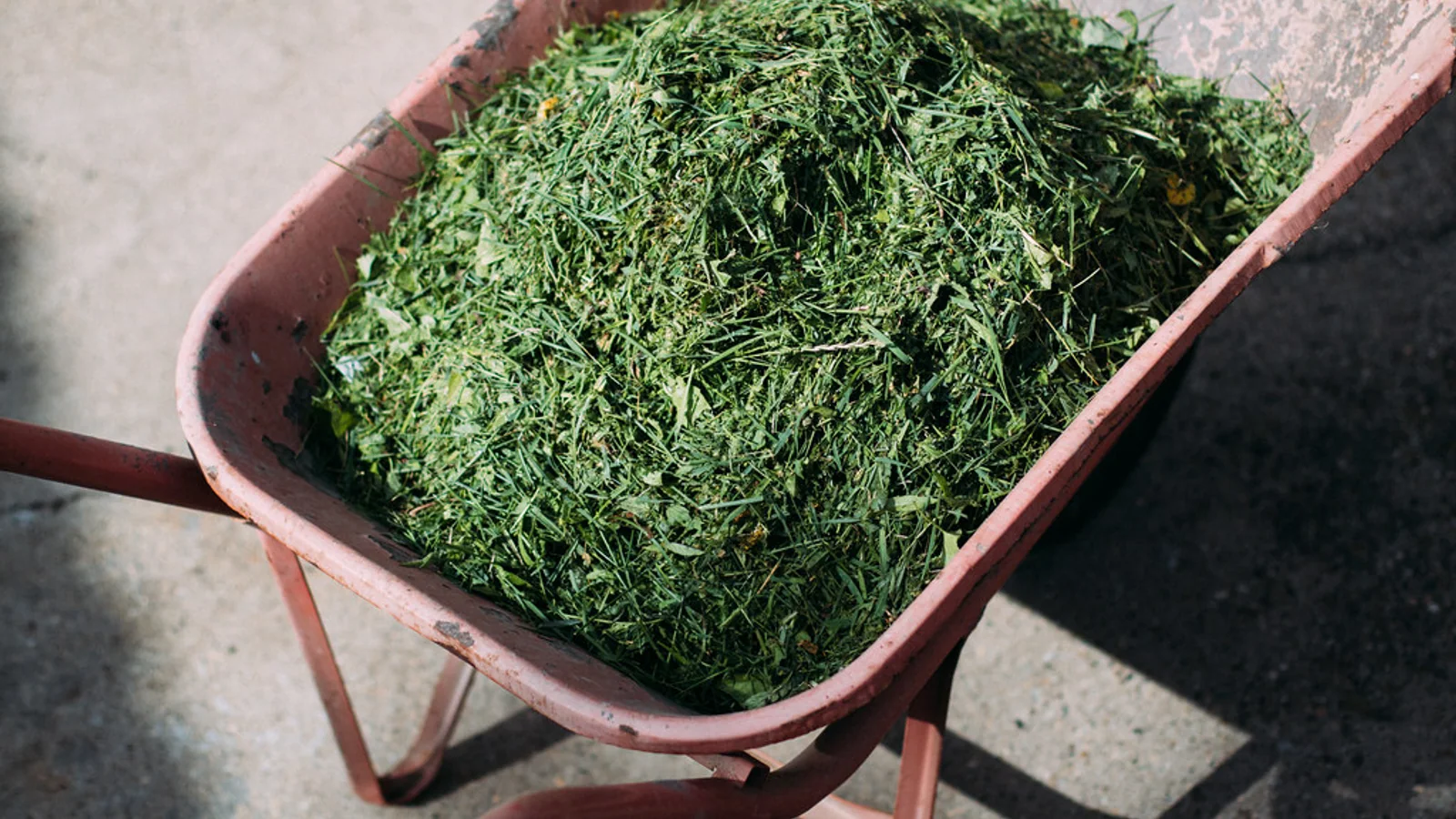
Leave short, evenly dispersed clippings on healthy turf. They decompose and do not normally create thatch. Prevent clumps by following the one-third rule: at a 4-inch target, mow before the stand grows above 6 inches. Spread light windrows immediately, collect mats that still cover the leaf canopy, and return pavement clippings to the lawn instead of sending them toward streets or drains.
A bag full of clippings looks like proof that the lawn was cleaned, but most routine cuts should not create one. When the mower is set for the grass and arrives before growth gets away, the pieces fall between the leaves and decompose. Bagging then adds handling and disposal without fixing a turf problem.
The decision changes when grass is overgrown, wet, diseased, full of mature weed seedheads, or cut into thick windrows. It also changes at the edge of the property. Clippings that belong on turf do not belong on a driveway, in a gutter, or in a storm drain, where they can contribute nutrients and organic material to local water.
Why routine clippings can stay
UF/IFAS recommends returning clippings unless they form clumps. Grass leaves contain water and readily decomposable tissue, so small pieces break down relatively quickly. They do not normally cause thatch; thatch is primarily an accumulation of slower-decomposing stems, roots, rhizomes, and stolons at the soil surface.
Returning clippings still depends on good mowing. The blade must be sharp, the deck must match the species and cultivar, and each cut should remove no more than one-third of the current leaf height. Here is the practical math: a St. Augustinegrass lawn maintained at 4 inches should be cut before it exceeds 6 inches, because removing 2 inches from a 6-inch leaf removes one-third. Other grasses need their own target height.
- Mow when turf is dry enough to cut cleanly.
- Change mowing direction to reduce repeated wheel patterns.
- Keep the blade sharp so tips are cut rather than torn.
When clumps need attention
Wet or excessively tall grass can leave piles that shade the living canopy. Judge the result from above: if clippings lie as a thin scatter and green leaves remain visible, leave them. If a windrow or mat hides the canopy, spread it with a rake or a second pass after conditions improve. Collect only the material that cannot be distributed without repeatedly driving over soft turf.
Avoid solving clumps by lowering the mower enough to scalp the lawn. If weather delayed service and the grass is far above its normal height, return it gradually over multiple mowings. Rainy-season growth in Northwest Florida can change the interval quickly, so the calendar should follow growth and safe mowing conditions rather than a fixed day at any cost.
- Remove objects and inspect for hidden debris before a delayed cut.
- Do not leave thick piles over healthy turf overnight.
- Clean the mower according to its manual before moving between problem areas.
Keep pavement and stormwater clear
Use a blower or broom to return scattered clippings from walks and driveways to the lawn. Do not blow material into the street or down a drain. Okaloosa County outreach tells residents to sweep fertilizer, grass, and dirt back onto the lawn, while Walton County's stormwater ordinance treats yard waste and lawn products as pollutants when discharged to its system.
The same principle applies near ponds, ditches, canals, bays, and other water. Maintain control of the discharge direction and stop before material crosses the property edge. Specific enforcement and set-out rules depend on the municipality, county area, provider, and site, but keeping yard material out of water pathways is a sound practice everywhere.
A finished mowing visit includes hard-surface cleanup. Return clippings to turf; do not send them toward the nearest drain.
Use bagging as a tool, not a default
Temporary collection can make sense when grass is too tall to disperse, storm debris is mixed through the canopy, or seedheads and plant material need controlled removal. Disease and weed situations should be identified before assuming bagging is necessary, and any pesticide-related sanitation advice must follow the diagnosis and label.
If material is collected, confirm where it goes. Ordinary curbside yard-waste rules vary between cities, unincorporated areas, and haulers, and some services exclude contractor-generated material. Compost suitable clippings where permitted, use an accepted disposal method, and put responsibility for removal in a lawn-service agreement rather than assuming the public collection route will take it.
Most regular mowing should create clippings small enough to remain. Frequent heavy piles usually point to timing, moisture, or mower setup, not a need to bag forever.
Common questions
Frequently asked questions
Do grass clippings cause thatch in a Florida lawn?
Routine clippings generally do not cause thatch because the leaf pieces decompose quickly. Thatch is mainly slower-decomposing stems, roots, rhizomes, and stolons. Excessive growth, fertility, or irrigation can contribute to thatch indirectly, so diagnose a true layer before dethatching.
Should clippings be removed after mowing wet grass?
Wet grass is more likely to clump and cut poorly, so waiting for safer, drier conditions is preferable. If mowing cannot be delayed and heavy windrows remain, spread them evenly or remove the material that cannot be dispersed. Never blow the clumps into a street or drain.
Sources and local guidance
This educational guide was prepared using the primary resources below. Product labels and current local rules always take priority.
- Mowing Your Florida Lawn (UF/IFAS Extension)
- How to Manage Yard Wastes to Protect Surface Water (UF/IFAS Extension)
- Prevent Illicit Discharges (Okaloosa County)
Keep reading
Related lawn care guides
How Often Should You Mow a Florida Panhandle Lawn?
A practical guide to choosing the right mowing interval for a Florida Panhandle lawn as grass growth, rainfall, temperature, and turf type change.
Read the guide
Florida Grass Mowing Height Guide for Panhandle Lawns
Use grass species and cultivar, not a mower deck number or a neighbor's lawn, to choose a healthy mowing height for Florida Panhandle turf.
Read the guide
What Does a Recurring Lawn Service Include?
Recurring lawn service should define mowing, lawn maintenance, frequency, access, debris handling, and which optional yard tasks are included.
Read the guideLocal lawn care
Need help with your Okaloosa or Walton County lawn?
Ask about lawn mowing, yard cleanup, tree and shrub trimming, bed maintenance, weed control, mulching, or debris removal. Service and address availability must be confirmed.